In summary:
- Your phone’s “feel” isn’t just in your head; it’s determined by hardware tolerances and software settings you can control.
- Mastering long-press isn’t about patience, but about tuning hidden settings like Haptic Touch duration and animation scales for near-instant access.
- While 3D Touch offered pressure-sensing, modern Haptic Touch provides the same shortcuts if you know how to optimize its timing.
- You can create your own one-tap shortcuts for any app using built-in tools like the Shortcuts app, bypassing the long-press entirely.
- Combining long-press, Back Tap, and Developer Options creates an “efficiency stack” that dramatically boosts your perceived speed of use.
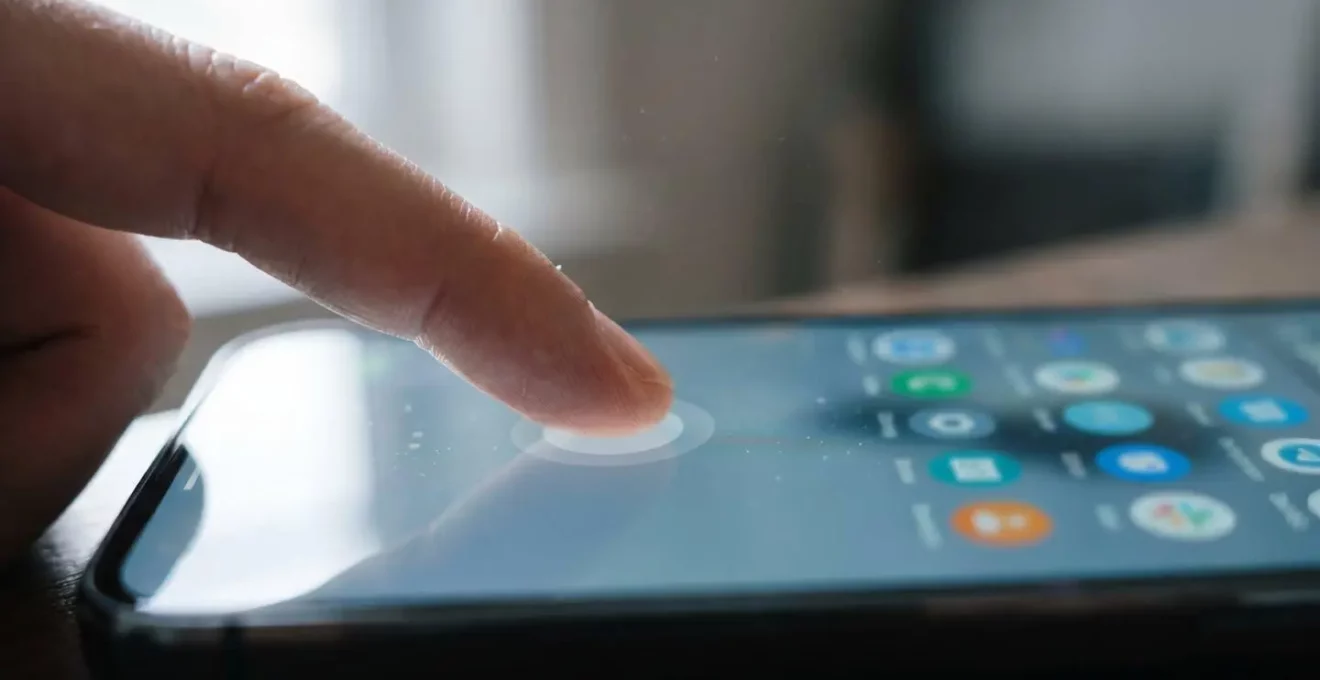
You pull out your phone, a sleek slab of glass and metal that costs as much as a laptop, and you tap on an icon. An app opens. You tap a button. Something happens. This is the interaction model for billions of people, a simple cause-and-effect loop. But what if you’re only using a fraction of your device’s interactive potential? You’ve likely been told to “long-press an app icon for shortcuts,” a tip as common as it is surface-level. It’s the digital equivalent of being told a car has a steering wheel and four tyres.
This advice barely scratches the surface. It doesn’t explain why your identical phone feels different from a friend’s, why some menus feel sluggish, or how the physical vibration you feel is part of a complex system you can manipulate. The real power isn’t in knowing that long-press exists; it’s in understanding the interplay between software timings, hardware mechanics, and your own sensory perception. The key to unlocking a faster, more personal smartphone experience isn’t about learning more features, but about mastering the physics and psychology of the features you already have.
This guide moves beyond the basics. We’ll deconstruct the mechanics of haptic feedback, explore the settings that govern interaction speed, and reveal how to build a custom efficiency stack. You’ll learn not just what to press, but why one press feels different from another and how to tune your device to perfection, turning a simple gesture into a powerful productivity tool.
To navigate this deep dive into your phone’s interactive core, here is a breakdown of the key areas we will explore, transforming you from a casual user into a power user who commands their device with precision and speed.
Summary: Mastering the Hidden Layers of Smartphone Interaction
- Why Does Your Phone’s Vibration Feel Weaker Than Your Friend’s Identical Model?
- How to Shorten Long-Press Time for Faster Access to Quick Actions?
- Older 3D Touch or New Haptic Touch: Which Offers More Shortcuts?
- The Touch Sensitivity Setting That Makes Haptic Menus Actually Responsive
- How to Add One-Tap Quick Actions to Apps That Lack Default Options?
- Why Tapping the Back of Your iPhone Can Launch Any App Instantly?
- How to Access Developer Options That Boost Flagship Performance by 25%?
- 17 iPhone Features Hidden in Settings That Transform Daily Use
Why Does Your Phone’s Vibration Feel Weaker Than Your Friend’s Identical Model?
It’s a common, yet perplexing, experience. You and a friend have the exact same flagship phone, purchased weeks apart, yet the haptic feedback on theirs feels crisp and sharp, while yours feels mushy or weak. The assumption is that two identical models should perform identically, but this overlooks a crucial aspect of mass manufacturing: tolerance. The tiny linear actuators or Taptic Engines that create vibrations are complex mechanical parts. To keep costs manageable, manufacturing tolerances are intentionally kept loose.
This means there is a natural, acceptable variance in performance from one unit to the next. In fact, technical documentation reveals that considerable variation exists among haptic actuators of the same type. So, no, you’re not imagining it; there is a real, physical difference. However, another factor is at play: your brain’s sensory adaptation. Constant exposure to the same level of vibration creates a ‘sensory baseline’, causing you to perceive the feedback as less intense over time. You can reset this perception with a ‘haptic detox’.
By turning off all system haptics for a full 24 hours and then re-enabling them, the default feedback often feels noticeably stronger. Your brain, deprived of the stimulus, recalibrates. This simple trick can often restore the “new phone feel” without touching a single piece of hardware. It highlights that the “feel” of your device is a combination of its physical components and your own neurological response, both of which can be managed.
How to Shorten Long-Press Time for Faster Access to Quick Actions?
The term “long-press” is a misnomer; the goal isn’t to press for a long time, but to press just long enough to trigger an action instead of a simple tap. For efficiency, every millisecond counts. The delay before a Quick Action menu appears is not a fixed universal constant; it’s a user-adjustable setting that has a direct impact on your perceived performance and workflow speed. Most users leave this at the default, enduring a lag they don’t realise they can eliminate.
On iOS, this crucial setting is found under Accessibility > Touch > Haptic Touch. You are presented with two options: ‘Fast’ and ‘Slow’. The ‘Slow’ setting, often the default, requires a hold duration of about 0.5 seconds. Switching to ‘Fast’ reduces this to approximately 0.3 seconds. While 0.2 seconds may seem trivial, in the world of user interface interaction, it’s the difference between an action feeling sluggish and feeling instantaneous. This one change affects not just app icon shortcuts, but every Haptic Touch interaction across the system, from previewing links to expanding notifications.
Adjusting this setting is the single most effective way to make your device feel more responsive. It re-trains your muscle memory to expect a near-immediate response, shortening the feedback loop between your intent and the phone’s action. Power users live by the ‘Fast’ setting, as it fundamentally changes the rhythm of how you interact with your device, encouraging more frequent use of Quick Actions because they no longer feel like a time-consuming alternative to just opening the app.
- Open Settings and navigate to the Accessibility section.
- Tap on ‘Touch‘ to access touch interaction controls.
- Select ‘Haptic Touch‘ from the available options.
- Choose the ‘Fast‘ sensitivity option to reduce the long-press duration.
- Test the new setting by long-pressing any app icon; the menu should now appear noticeably faster.
Older 3D Touch or New Haptic Touch: Which Offers More Shortcuts?
The transition from 3D Touch to Haptic Touch on iPhones is a frequent point of confusion, with many early adopters of pressure-sensitive screens believing a downgrade occurred. 3D Touch, available on iPhones from the 6s to the XS, used a hardware layer that could sense multiple levels of pressure. Haptic Touch, present on all modern iPhones, is a software-based solution that relies on the duration of a press. So, which system actually offers more shortcuts?
When it comes to the primary use case—Home Screen Quick Actions—the answer is neither. Both 3D Touch and Haptic Touch support the exact same number of shortcuts (up to four per app, as defined by the developer). The core functionality remains identical. The difference lies in the ‘how’ and the ‘what else’. 3D Touch offered nuanced, pressure-based gestures like ‘Peek and Pop’ that have been eliminated. However, Haptic Touch’s reliance on a simple long-press makes it universally applicable across all iOS and iPadOS devices, creating a more consistent user experience. As the following comparison shows, the trade-off was one of niche features for universal consistency.
A direct comparison reveals that while 3D Touch had more unique interaction methods, Haptic Touch delivers the same core shortcut functionality. This is confirmed by a detailed technical analysis from MacRumors, which provides a clear breakdown of the features.
| Feature Category | 3D Touch (iPhone 6s – XS) | Haptic Touch (iPhone XR+) |
|---|---|---|
| Home Screen Quick Actions | ✓ Available (pressure-based) | ✓ Available (duration-based) – Same menu items |
| Number of Quick Actions | Up to 4 per app (developer-defined) | Up to 4 per app (developer-defined) – Identical |
| Peek & Pop Gestures | ✓ Light press = Peek, Hard press = Pop | ✗ Not available (no pressure sensitivity) |
| Keyboard Cursor Control | Press anywhere on keyboard | Long-press space bar only |
| Pressure-Sensitive Drawing | ✓ Supported in compatible apps | ✗ Not supported |
| App Switcher Gesture | ✓ Hard press left edge | ✗ Removed feature |
| Device Compatibility | iPhone only (premium models) | iPhone & iPad (all modern devices) |
| Activation Speed | ~0.1-0.2 seconds (pressure) | ~0.3-0.5 seconds (duration) |
Ultimately, the debate is less about the quantity of shortcuts and more about the interaction model. The change simplified the system at the cost of depth for a small subset of power users. As one expert analysis puts it:
Haptic Touch is simply a marketing name for a long press combined with haptic feedback from the Taptic Engine.
– MacRumors Technical Analysis, Haptic Touch vs 3D Touch Guide
The Touch Sensitivity Setting That Makes Haptic Menus Actually Responsive
You’ve set your Haptic Touch duration to ‘Fast’, but menus still feel sluggish or fail to register. Before blaming the software, it’s essential to understand that touch responsiveness is a system, and the duration setting is just one component. Several non-obvious factors, both hardware and software, can introduce interaction latency, creating a delay between your physical touch and the system’s response. These culprits often go undiagnosed, leading to user frustration.
A thick tempered glass screen protector, for instance, can physically increase the distance your finger’s electrical signal needs to travel, adding milliseconds of delay. Similarly, software states like Low Power Mode or a nearly full storage drive can cause system-wide lag that manifests as touch unresponsiveness. The phone’s CPU is too busy managing power or shuffling data to process your input instantaneously. Even environmental factors matter; an overheated device will automatically throttle its performance, including its touch sampling rate, to protect internal components.
Identifying the source of the lag requires a process of elimination. Before diving deep into obscure settings, check these common offenders:
- Screen Protector: Thick glass protectors (>0.3mm) are a primary cause of increased latency. Test by removing it temporarily.
- Low Power Mode: This mode intentionally reduces system performance, including the touch sampling rate.
- Storage Capacity: A device with over 90% storage used will experience lag that affects touch input.
- Background Processes: Too many active apps can consume CPU resources needed for instant touch processing.
- Temperature Throttling: An overheated phone (>40°C) will automatically reduce performance and touch sensitivity.
Technical Breakdown: Input Latency vs. Haptic Latency
It’s vital to distinguish between two types of delay. A technical breakdown of touch systems shows that input latency—the time for the system to register your touch—is typically 20-50ms. Haptic feedback latency—the time for the motor to vibrate—is a separate 10-30ms. The ‘Haptic Touch Sensitivity’ setting doesn’t change these hardware-dependent values; it only changes the *software duration threshold* for a long-press. True responsiveness is dictated by the underlying hardware like the touchscreen controller’s refresh rate, which cannot be improved by software settings alone.
How to Add One-Tap Quick Actions to Apps That Lack Default Options?
Long-press Quick Actions are powerful, but they have two limitations: developers have to implement them, and they still require a press-and-hold gesture. What if an app you use constantly has no shortcuts? Or what if you want true one-tap access to a specific function, like composing a new email or opening directly to your Instagram stories camera? The answer lies in moving beyond the default system and creating your own custom actions using the built-in Shortcuts app on iOS.
The Shortcuts app is a powerful automation tool that allows you to string together actions from various apps. Crucially, any shortcut you create can be added to your Home Screen as an icon that looks just like a regular app. This icon, however, acts as a one-tap trigger for your custom workflow. For example, you can create a shortcut that “Opens App [Spotify]” and then “Plays Playlist [Workout Mix]”. Adding this to your Home Screen gives you a single tap to start your workout music, bypassing opening Spotify, navigating to your library, and finding the playlist.
This method completely circumvents the need for developer-provided Quick Actions. You become the developer of your own user experience, designing your Home Screen not just as a grid of apps, but as a dashboard of one-tap actions tailored to your specific needs. You can even customise the icon image and name, allowing for a fully personalised and hyper-efficient interface. This is the ultimate expression of the efficiency stack: when the built-in shortcuts aren’t enough, you build your own.
Here’s the basic workflow for creating a custom Home Screen action:
- Open the Shortcuts app and tap ‘+’ to create a new shortcut.
- Add the actions you need. For a simple app function, you might use the ‘Choose from Menu’ action to mimic a native Quick Action UI.
- Name your shortcut with a clear, action-oriented title (e.g., ‘Log Water’ or ‘Start Commute’).
- Tap the settings icon within the shortcut and select ‘Add to Home Screen‘.
- Customise the icon and name that will appear on your Home Screen.
Why Tapping the Back of Your iPhone Can Launch Any App Instantly?
While long-pressing an icon provides context-sensitive shortcuts (actions related to that specific app), your phone also has a hidden input surface capable of launching context-free actions: the back of the device itself. The ‘Back Tap’ feature on iOS (and its equivalent ‘Quick Tap’ on Google Pixel phones) uses the phone’s accelerometers to detect sharp taps on its chassis, turning the entire back panel into a customizable button.
This is fundamentally different from a long-press. A long-press on the Camera app icon might offer ‘Take Selfie’ or ‘Record Video’. A double-tap on the back of the phone, however, can be configured to do anything, from anywhere. You could be in your browser or on the home screen; a double-tap can be set to always launch the Camera app, take a screenshot, toggle the flashlight, or even run a complex multi-step Shortcut. It’s a global, system-wide trigger that is always available.
The power of Back Tap comes from its immediacy and its context-free nature. It’s perfect for the one or two actions you perform most frequently throughout the day, regardless of what you’re currently doing on your phone. This creates an opportunity to build a strategic ‘efficiency stack’. You can map your most common action to a double-tap, your second-most common to a triple-tap, and relegate app-specific functions to the slightly slower long-press Quick Actions. This hierarchical approach ensures your most-needed functions are always the fastest to access.
Your Action Plan: Mapping Shortcuts by Frequency
- High-Frequency Actions (10+ times daily): Audit your daily usage. What is your most repeated action? Assign this to Back Tap (Double-Tap) for instant access. Example: Launching the Camera or a note-taking app. Find this in Settings > Accessibility > Touch > Back Tap.
- Medium-Frequency Actions (3-5 times daily): Identify tasks that are app-specific but common. These are perfect for Long-Press Quick Actions. Example: Long-pressing the Camera icon to directly ‘Take Selfie’.
- Context-Specific Actions: Leave less frequent, more complex tasks as in-app features. There’s no need to create a shortcut for everything. Example: Adjusting advanced camera settings after the app is open.
- Accident Prevention: If you find Double-Tap triggers accidentally, assign your primary shortcut to Triple-Tap, which requires a more deliberate gesture.
- Review and Refine: Re-evaluate your setup every month. As your habits change, your shortcut stack should evolve with you to maintain peak efficiency.
How to Access Developer Options That Boost Flagship Performance by 25%?
The sensation of speed on a smartphone isn’t just about raw processing power; it’s heavily influenced by the user interface animations. The time it takes for a menu to fade in, a window to slide up, or an app to zoom into view contributes significantly to the perceived performance of your device. On Android, you have direct control over these animations via a hidden ‘Developer Options’ menu, and tuning them is the closest you can get to a free performance upgrade.
To unlock this menu, go to Settings > About Phone and tap on the ‘Build Number’ seven times. Once enabled, a new ‘Developer Options’ menu will appear in your System settings. Inside, you’ll find three crucial settings: ‘Window animation scale’, ‘Transition animation scale’, and ‘Animator duration scale’. By default, these are all set to ‘1x’. Changing them to ‘0.5x’ cuts the duration of every UI animation in half. App launches, settings menus, and long-press quick actions will all appear to happen almost twice as fast. While this doesn’t increase your phone’s CPU speed, it dramatically reduces the visual delay, making the device feel incredibly snappy.
However, this menu contains powerful settings that can also negatively impact your device. It is crucial to distinguish between safe, cosmetic tweaks and risky changes that can affect stability and battery life. The animation scale settings are completely safe and easily reversible. Other settings, like ‘Background process limit’ or ‘Don’t keep activities’, can break notifications and app functionality and should be avoided by most users.
The key is to modify only the settings known to be safe for improving perceived performance. This table breaks down the most common Developer Options, highlighting which are safe to adjust and which to avoid.
| Setting Category | Recommendation | Impact | Risk Level |
|---|---|---|---|
| Window/Transition/Animator Scale | ✓ SAFE – Set to 0.5x | Faster perceived UI responsiveness, reduced animation time | 🟢 None – Easily reversible |
| Show Taps / Pointer Location | ✓ SAFE – Enable for demos | Visual feedback on screen, useful for troubleshooting | 🟢 None – Cosmetic only |
| Force GPU Rendering | ⚠️ CAUTION – Test first | May improve graphics in some apps, can increase battery drain | 🟡 Low – Monitor battery impact |
| Background Process Limit | ✗ AVOID – Keep default | Restricting background apps breaks notifications, syncing, and multitasking | 🔴 High – Disrupts core functionality |
| Don’t Keep Activities | ✗ AVOID – Keep disabled | Destroys app states immediately when switching apps, causes data loss and poor UX | 🔴 Critical – Major usability degradation |
| Force 4x MSAA (Anti-Aliasing) | ✗ AVOID – Heavy battery cost | Smoother graphics in OpenGL apps, massive GPU/battery impact | 🟡 Medium – Performance trade-off |
Key Takeaways
- The ‘Fast’ Haptic Touch setting is the single most important tweak for making your iPhone feel more responsive.
- Android users can achieve a massive ‘perceived performance’ boost by cutting animation scales to ‘0.5x’ in the hidden Developer Options.
- Build an ‘efficiency stack’: Use Back Tap for your #1 most frequent action, and long-press Quick Actions for app-specific tasks.
17 iPhone Features Hidden in Settings That Transform Daily Use
Mastering your device’s interactions goes beyond long-press and Back Tap. The iOS Settings app is filled with a host of powerful, yet often overlooked, accessibility features that can be repurposed by any user to create a more comfortable and efficient experience. These aren’t gimmicks; they are tools designed to solve specific interaction challenges, and understanding them allows you to fine-tune your iPhone to your exact physical needs and preferences.
For example, ‘Reachability‘ is designed for one-handed use on large screens, but it’s also a power-user tool. By swiping down on the home bar, you bring the top half of the screen down, making it effortless to long-press app icons in the top rows without adjusting your grip. ‘Tap to Wake‘ is another subtle but important feature. It creates a deliberate two-step interaction (Tap to wake > View > Long-press), which can be more intentional than the sometimes over-eager ‘Raise to Wake’.
Diving deeper, ‘Touch Accommodations‘ offers granular control over how the screen responds to your touch. You can adjust the hold duration required for a press to register or tell the system to ignore repeated taps—invaluable for users with motor control difficulties, but also useful for anyone using their phone with gloves on. Even the core ‘System Haptics‘ can be disabled. While this makes the device feel ‘dead’ to some, it silences all the little clicks and bumps from UI elements, which can be a relief for those sensitive to constant vibration and provides a marginal battery saving. These settings, when combined, allow for a level of physical customisation that most users never discover.
- Reachability: (Settings > Accessibility > Touch) Swipe down on the bottom screen edge to pull the top half down, making it easier to long-press apps at the top of the screen.
- System Haptics Control: (Settings > Sounds & Haptics) Toggle controls all subtle feedback. Disabling it conserves a small amount of battery but changes the ‘feel’ of the OS.
- Tap to Wake: (Settings > Accessibility > Touch) Enables screen wake on a single tap, creating a more intentional interaction sequence than the passive ‘Raise to Wake’.
- Touch Accommodations: (Settings > Accessibility > Touch) Advanced controls for Hold Duration and Ignore Repeat to fine-tune touch input for medical conditions or glove use.
Now that you are equipped with the knowledge to tune your device’s core interactions, the next logical step is to apply this efficiency-focused mindset to all aspects of your digital life. Start by auditing your most common tasks and build the custom shortcuts and settings that serve you best.